just click the up coming post created by-Schwarz Burgess
The most recent laser innovation allows us to make a thinner corneal flap, which is faster and easier for clients to heal. This likewise decreases problems like glow and also halos from the edges of the treatment zone.
Commonly, this flap was created with a microkeratome, which had specific dangers. hop over to these guys utilize a femtosecond IntraLase laser to produce the flap, which is a lot more accurate as well as much safer.
The Femtosecond Laser
Historically, conventional LASIK surgical procedure utilized a mechanical cutting device called a microkeratome to develop a hinged flap on the cornea. The cosmetic surgeon after that folded up back the flap to access the eye's underlying tissue. The specialist then used an excimer laser to improve the corneal cells, fixing refractive errors like nearsightedness and also farsightedness.
The femtosecond laser utilized for LASIK procedures uses substantial advantages over traditional tools, consisting of enhanced safety and security, better recovery, as well as exact outcomes. The femtosecond laser's powerful pulses of light interfere with the corneal tissues in an exactly controlled way.
The femtosecond laser's smart power control likewise allows doctors to track eye movement 200 times per 2nd, which ensures that every laser pulse is totally precise. This allows cosmetic surgeons to carry out best lamellar and passing through keratoplasties in addition to clear corneal cuts, cataract surgical procedure, as well as extra. The outcome is an individualized therapy that gives individuals with excellent aesthetic results. In fact, lots of New York City laser eye surgeons contrast the individualized outcomes to those accomplished with contact lenses and glasses.
The IntraLase Flap
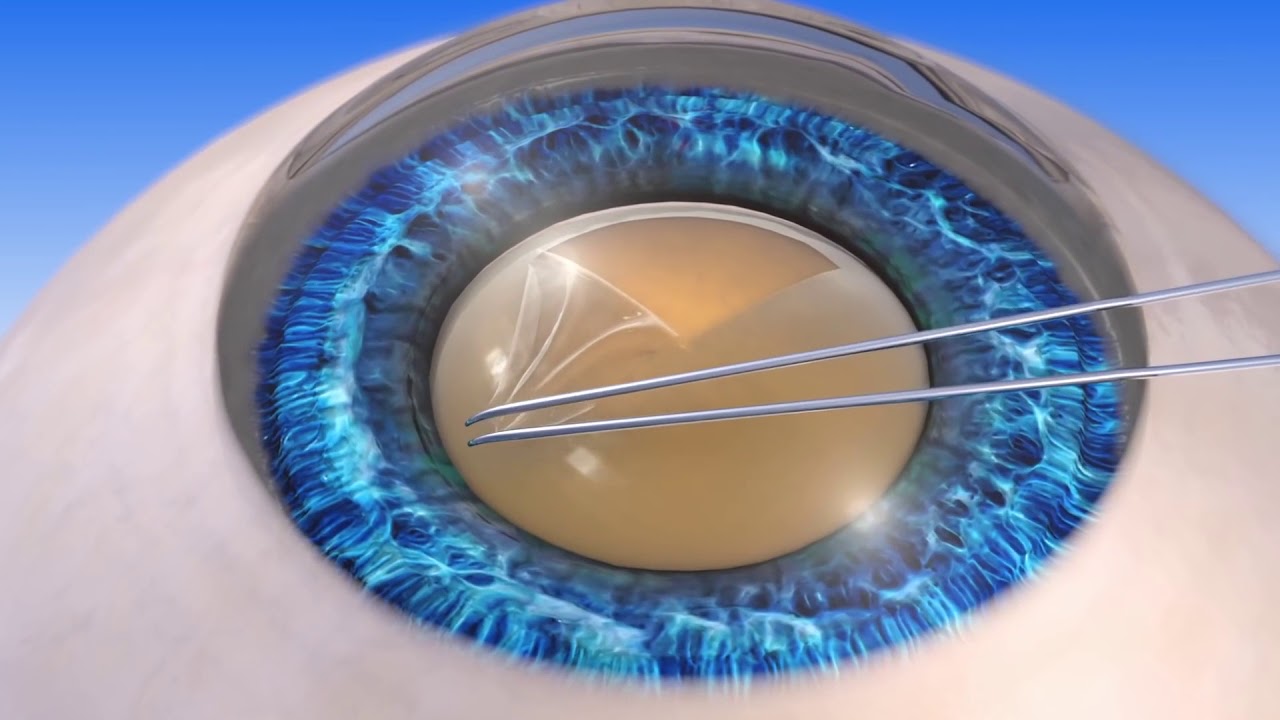
The initial step of the LASIK treatment entails creating a flap on the corneal epithelial surface area. Generally this was made with a hand-held bladed instrument called the microkeratome. Because the microkeratome makes physical contact with your eye, it can present a component of danger to the surgical treatment.
The femtosecond laser is much safer for this vital first step of the LASIK procedure due to the fact that it does not make physical contact with your eye. Rather the femtosecond laser develops a pattern of tiny bubbles beneath the corneal surface that after that attach to create the flap.
This new technique enables the surgeon to set precise specifications for the flap thickness, depth and hinge location. This supplies the surgeon with a high degree of personalization that gets rid of issues connected with the flap as well as guarantees an extra effective LASIK outcome. It additionally enables even more individuals with slim corneas, who were rejected as LASIK prospects in the past, to receive the treatment and delight in boosted vision.
The SMILE Procedure
The FDA has just accepted a brand-new refractive surgical treatment treatment that is a different to LASIK called little laceration lenticule extraction (SMILE). It is an outstanding laser therapy option for people with nearsightedness, or nearsightedness.
Throughout the SMILE procedure, a Visumax femtosecond laser generates pulses that will specify and establish an outline of a slim lens-shaped piece of corneal cells, called a lenticule. The doctor after that creates a keyhole cut on the corneal surface area, as well as gets rid of the lenticule to improve the cornea as well as correct vision.
The fact that SMILE does not need a flap might help to minimize dry eye signs after the treatment, as well as it likewise appears that the little lenticule laceration triggers less damage to the corneal nerves, causing far better biomechanical stability in the future. These advantages, along with the reality that SMILE deals with a wider variety of nearsightedness problems than keratomileusis does, make SMILE an enticing choice for several people.
The Excimer Laser
The excimer laser makes use of ultraviolet radiation to change the corneal shape, reducing refractive mistakes such as nearsightedness (nearsightedness), hyperopia (farsightedness) and astigmatism. It is the most crucial piece of equipment in Lasik surgical treatment as well as the key to eliminating your dependence on glasses and also call lenses.
Excimer lasers use a combination of two gases, generally argon fluoride or krypton fluoride to create a beam of light of ultraviolet light which can be exactly focused. This allows the laser to break apart the carbon-to-carbon bonds in the corneal cells without triggering any type of damage to other close-by eye tissue.
Unlike previous excimer lasers, the WaveLight EX500 has incorporated non-contact real-time pachymetry, which offers Dr. George split second feedback on the progression of your treatment, making sure that your corneal density is being accurately lowered as prepared. This assists the doctor recognize that the femtosecond laser is developing the flap at the appropriate predetermined density, and validates that the ablation quantity is being minimized as anticipated to treat your certain refractive error.